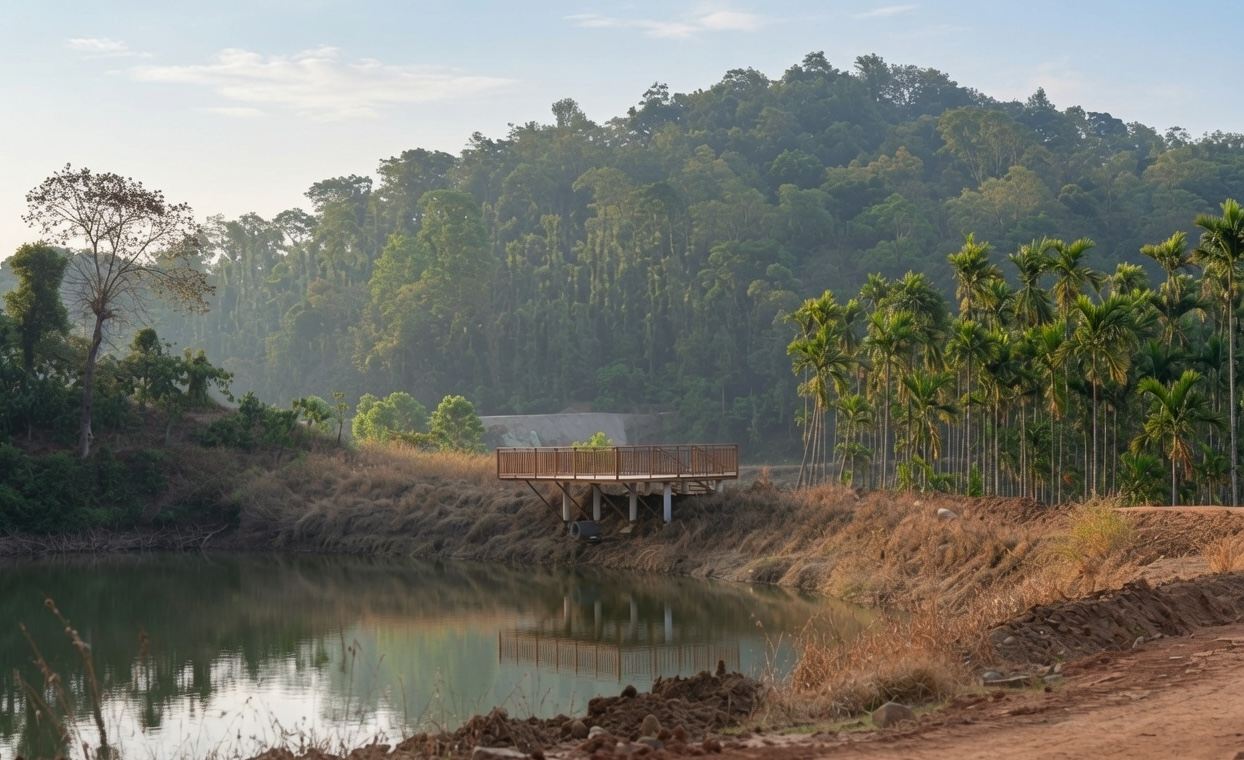







How Micro-Forests Improve Groundwater Levels in Farmland
Posted by Delight Eco Farms on ·3 min read

Micro-forests improve groundwater levels by enhancing soil structure, reducing runoff, and increasing water absorption. These dense, native tree systems help farmland retain moisture and become more sustainable over time.
Water is one of the biggest concerns in farmland today. Even in regions with good rainfall, many lands struggle with water retention and groundwater levels. This is where the idea of micro-forests is gaining attention.
Unlike large plantations, micro-forests are small, dense patches of trees—often created using methods like the Miyawaki technique. But beyond greenery, they play a deeper role in improving how water behaves in the land.
What Is a Micro-Forest?
A micro-forest is a compact, densely planted area of native trees and shrubs. These forests are designed to grow quickly and mimic natural ecosystems.
They are usually:
- Small in size
- High in plant density
- Built using native species
- Self-sustaining after initial growth
Even a small patch can create a noticeable environmental impact.
How Groundwater Works in Farmland
Before understanding the impact, it’s important to know how groundwater behaves.
When it rains:
- Some water runs off the surface
- Some evaporates
- Some gets absorbed into the soil
Only the water that slowly seeps deep into the ground contributes to groundwater recharge.
The problem?
In many farmlands, runoff is high and absorption is low.
How Micro-Forests Improve Water Absorption
Micro-forests change the way water enters the soil.
Because of dense planting:
- Soil becomes loose and porous
- Organic matter increases
- Roots create natural channels
This allows rainwater to sink deeper into the ground instead of flowing away.
Reduction in Surface Runoff
Open farmland often loses water quickly, especially during heavy rainfall.
Micro-forests help by the following:
- Slowing down water flow
- Breaking the impact of rain on soil
- Acting as natural barriers
This reduces soil erosion and keeps more water within the land.
Continuous Moisture Retention
Micro-forests don’t just help during rain—they also help between seasons.
Tree cover:
- Reduces direct sunlight on soil
- Lowers evaporation
- Maintains humidity around the ground
This keeps the soil moist for longer periods, which indirectly supports groundwater stability.
Role of Deep Root Systems
One of the strongest advantages of micro-forests is their root network.
Different plants grow at different depths, creating:
- Multi-layered root systems
- Better soil binding
- Stronger water-holding capacity
These roots help water move deeper and stay longer in the ground.
Supporting Natural Water Cycles
Micro-forests slowly restore natural balance.
They contribute to:
- Better rainfall absorption
- Gradual groundwater recharge
- Reduced dependency on external water sources
Over time, the land becomes more self-sustaining.
Where to Use Micro-Forests in Farmland
Micro-forests work best when placed strategically.
Ideal areas include:
- Farm boundaries
- Low-lying zones
- Near water bodies
- Unused land patches
They should support farming, not interfere with it.
Why This Matters Long-Term
Water problems don’t appear overnight—they build slowly.
And the same is true for solutions.
Micro-forests are not quick fixes. But over time, they:
- Improve water availability
- Strengthen soil health
- Reduce long-term dependency on borewells
This makes farmland more stable and resilient.
Summary
Micro-forests are more than just green patches—they are functional ecosystems. By improving soil structure, reducing runoff, and supporting deeper water absorption, they play a significant role in groundwater recharge. When integrated thoughtfully into farmland, micro-forests can strengthen water stability and support long-term sustainability.