





Role of Water Management in Farmland Value
Posted by Delight Eco Farms on ·2 min read

Water management is a key factor in determining farmland value. Efficient systems such as rainwater harvesting, groundwater recharge, and proper drainage improve soil health, enhance climate resilience, and ensure long-term usability. Farmland with sustainable water planning remains productive, stable, and more valuable over time.
Water is one of the most critical factors that determines the long-term value of farmland. Regardless of location or soil quality, farmland without reliable water management gradually loses its usability. On the other hand, land with well-planned water systems remains productive, resilient, and valuable over time.
Understanding the role of water management is essential when evaluating farmland.
Water Determines Farmland Usability
Farmland value is directly linked to how consistently the land can support plant growth.
Good water management ensures:
- Stable crop or plantation growth
- Reduced dependency on erratic rainfall
- Better soil moisture balance
Land without proper water planning may remain unused or underutilised, reducing its long-term relevance.
Rainfall Alone Is Not Enough
Many buyers assume that high-rainfall regions automatically ensure water security. This is not always true.
Without proper management:
- Rainwater runs off without absorption
- Soil erosion increases
- Groundwater recharge remains limited
Effective water management captures, stores, and distributes rainfall efficiently across the land.
Impact on Soil Health and Fertility
Water and soil health are closely connected.
Proper water management:
- Prevents soil compaction and erosion
- Supports microbial activity
- Maintains nutrient balance
Poor water practices can wash away topsoil, reduce fertility, and permanently damage land quality.
Borewells vs Sustainable Water Planning
Excessive reliance on borewells increases long-term risk.
Sustainable farmland focuses on:
- Rainwater harvesting
- Recharge pits and percolation trenches
- Surface water conservation
- Reduced groundwater dependency
Land with sustainable water systems holds higher long-term value than land dependent on single water sources.
Climate Resilience and Water Security
Weather patterns are becoming less predictable.
Farmland with strong water management:
- Withstands dry spells better
- Handles heavy rainfall without damage
- Maintains plant health during seasonal stress
This resilience increases land reliability and value over time.
Lower Maintenance and Restoration Costs
Water-managed farmland requires fewer corrective measures.
Benefits include:
- Reduced soil restoration effort
- Lower plant mortality
- More predictable maintenance planning
This reduces long-term operational costs and improves land sustainability.
Water Systems Increase Long-Term Land Appeal
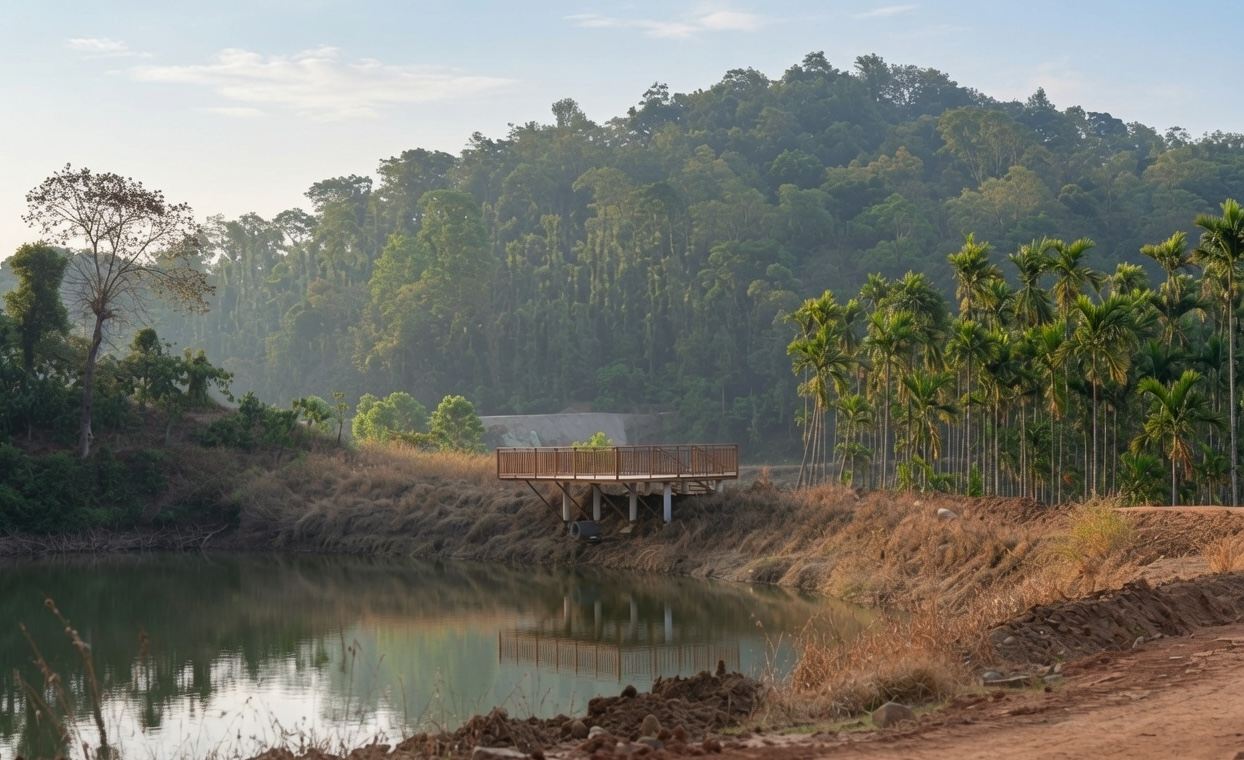
Farmland with visible water systems such as:
- Harvesting structures
- Recharge areas
- Natural drainage channels
is more attractive for long-term ownership and agricultural use. These features reflect planning and land stewardship.
Managed Farmland and Water Planning
Managed farmland models typically integrate water management into land maintenance plans. This ensures consistent care regardless of the owner’s presence and prevents neglect-related water issues.
Summary
Water management plays a vital role in determining farmland value. Proper planning improves soil health, supports sustainable agriculture, reduces climate risk, and lowers long-term maintenance costs. Farmland with efficient water systems remains usable, resilient, and valuable over time, making water management one of the most important factors in long-term farmland ownership.